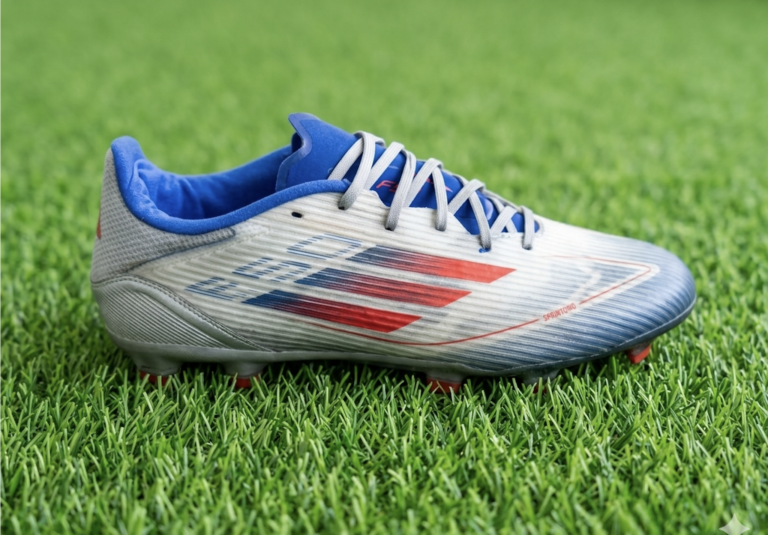
I’ve Played in $100 and $300 Soccer Cleats. The Difference Wasn’t What I Expected.
This week, Nike’s new Mercurial hit the shelves – the boot Cristiano Ronaldo and Kylian Mbappé will wear at the World Cup that kicks off tomorrow. It costs around three hundred dollars and the marketing copy uses the word “speed” so many times I lost count.
I own its grandfather.
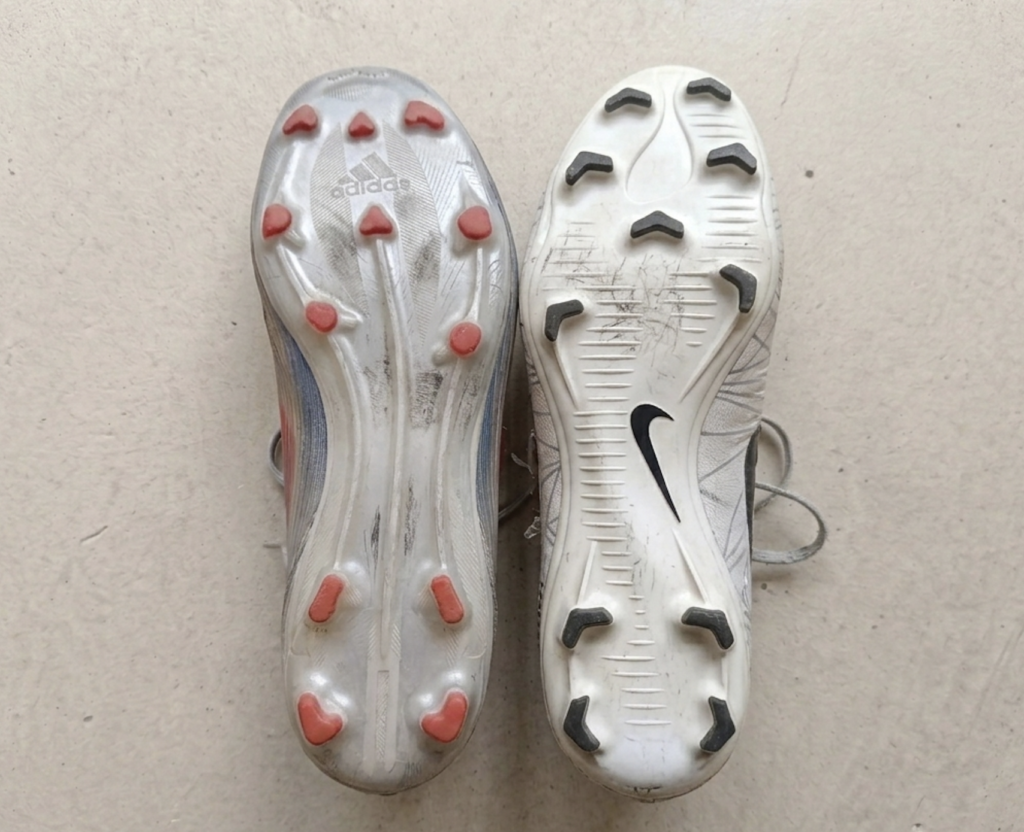
Back in 2017 I bought the Nike Mercurial Vapor Superfly V CR7, the white “Cut to Brilliance” colorway, because that was the boot Ronaldo wore that season and I had a problem. I won’t tell you what it cost because I’m still embarrassed, but it was three times what a sensible adult would spend on shoes he plays football in twice a week. Nine years later, that pair is still in my bag. So is a $100 pair of adidas F50 Messi League MGs, bought because I needed something for the artificial turf game and my wife had questions about the first purchase.
If you came here looking for a definitive answer on whether expensive soccer cleats are worth it, here it is: the difference between $100 and $300 was almost entirely about identity, not performance. And that’s not me being grumpy about money – it’s the most useful thing I can tell you before you spend any.
What the price tag is actually paying for
In the first article I made the case that surface match matters more than brand or price. This is the follow-up: now that you’ve sorted out FG, AG, TF and the rest, what does paying more actually get you?
Here’s the honest version. Across the line – take any boot from any brand at $60, $120, $200, $300 – what changes is usually:
- Upper material. Cheaper boots use thicker synthetic. Mid-range uses thinner, more touch-sensitive synthetic or engineered mesh. Top-tier uses knit or premium synthetics designed to feel like nothing. Weight drops by maybe 50 grams across the entire range.
- Soleplate. Cheaper boots use a heavier, stiffer plate. Top-tier uses lighter composite plates that flex with the foot.
- Branding tier. “Elite” / “Pro” / “Academy” / “Club” / “League” labels signal where you sit in the pyramid. Most brands run four or five tiers of the same model.
- A name on the side. Messi, Ronaldo, Mbappé. You’re paying for the signature.
What doesn’t change much: the stud configuration, the basic shape, and whether the boot will actually fit your foot. A $90 F50 League and a $260 F50 Pro have the same studs in the same pattern. The Pro is lighter and the upper feels nicer. That’s most of the difference.
What I actually noticed playing in both
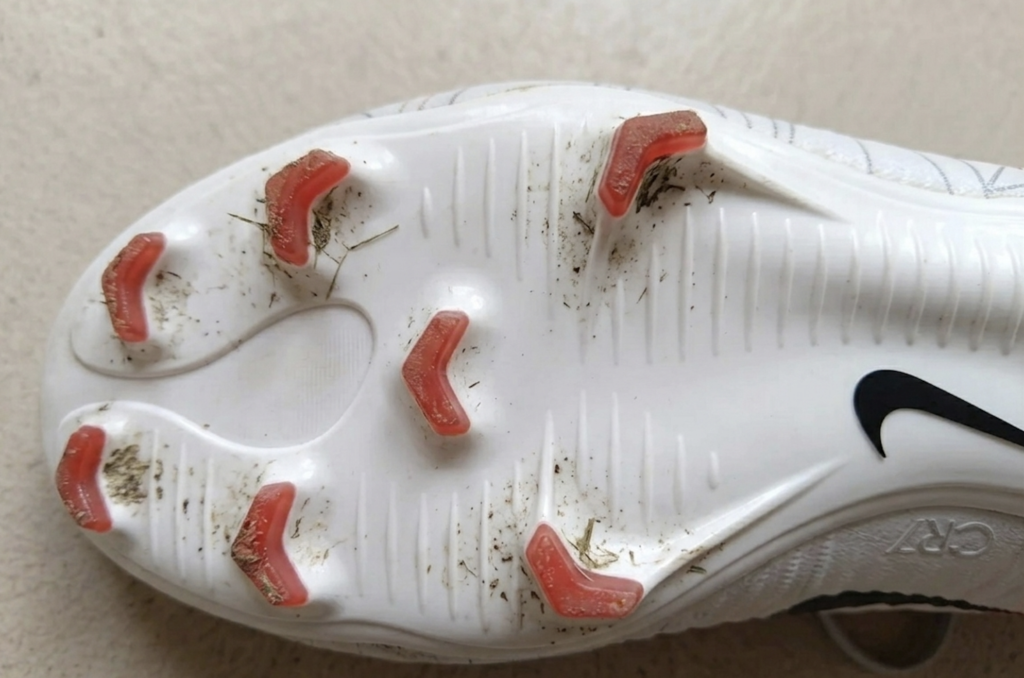
I’ll be specific. On grass, in the Mercurial CR7, the boot disappears on my foot. It’s a sensation rather than a shoe. When I plant and turn, the studs grip exactly where I expect, the upper hugs the foot, the touch is direct. Nine years on, the upper has softened, the studs are worn down on the corners, and it still feels better than it has any right to.
In the F50 Messi on turf, the boot feels like a shoe. Slightly heavier, slightly stiffer underfoot, the upper a little less melted onto my foot. But – and this is the part the gear-marketing budget can’t argue with – I play exactly the same in it. My touch isn’t better in the Mercurial. My passing isn’t worse in the F50. My speed is whatever my forty-year-old legs decide that day.
The $200 difference bought me a sensation. It didn’t buy me a game.
Fit is the part everyone rushes – and it matters more than anything else on the box
The single biggest mistake adults make buying boots, more important than brand or price tier, is fit. I see this constantly. Someone walks into a store, tries on the boot in the size their running shoes are, the boot feels “fine,” they buy it. Three weeks later they’re playing through a blister or quietly wishing they’d gone half a size up. Or – the worse one – they go a size down because they read somewhere that “boots should be snug” and “they’ll stretch,” and they spend six months in pain.
Here is what actually matters:
Snug, not painful. A football boot is supposed to feel firmer than a running shoe. Your toes should just barely brush the front when you stand flat. There should be no slop, no sliding inside the shoe when you cut. But “snug” doesn’t mean “your toenails are bruised.” If it hurts in the store, it will hurt on the pitch.
Try the boot you’ll actually wear, on the surface you’ll actually use, with the socks you’ll actually play in. A thin sock changes the fit. A thick sock changes the fit more. Bring your match socks if you can.
Walk in them. Then jog on the spot. Then plant and turn. Standing still is useless. The fit problems show up the moment you push laterally.
Modern boots barely stretch. This is the biggest myth in soccer-cleat advice and it’s been outdated for ten years. Leather boots used to stretch noticeably. Modern synthetic, knit, and engineered-mesh uppers stretch a little around the widest part of the foot and basically nowhere else. If the boot is short on length when you buy it, it will still be short in month six. Buy for the foot you have today.
Wide foot? Go for a brand that runs wide. Generally: adidas runs slightly wider, Nike runs slightly narrower, Puma sits in the middle. There are exceptions per model, but as a starting point, wide-footed players are usually happier in adidas.
Half-size question. A lot of soccer cleats run slightly long. If you’re between two sizes, the conventional advice is to size down – but this is exactly where people get into trouble. The safer version: if you can wear the smaller size with no pinching at all, take it. If there’s any pinch, take the larger size. Pinch in the shop is pain on the pitch.
So what should you buy?
If you read the surface article and now know what stud type you need, here’s the budget framework. All prices are rough US pricing in 2026 and shift with sales:
$60 to $90 – the entry tier. Brand-name boots from a real production line. Heavier, stiffer, but they have the right studs for the right surface and they’ll last a season of weekly play. If you’re not sure you’ll keep playing, or you’re rotating two pairs across surfaces (which we recommended in the last article), this is where most adults should start. Look at adidas Goletto, Nike Tiempo Legend Academy, Puma Future Play, adidas Predator Club.
$90 to $130 – the sweet spot for rec players. This is where the F50 Messi League sits, and it’s where I’d point most adult weekly players. You get a meaningfully lighter, better-fitting boot than the entry tier, the same studs as the boots above it, and you don’t feel stupid when it eventually wears out. The adidas F50 League Messi, Nike Tiempo Legend Pro, Nike Mercurial Vapor Academy – all live here. This is the “your $90 boot does ninety percent of what their $300 boot does” zone.
$130 to $200 – the mid-premium tier. Now you’re paying for materials. Lighter plates, nicer uppers, more attention to detail. You’ll feel the difference on your foot. Whether you’ll feel it in your game is a different question. Worth it if you play three or four times a week, if your feet are particular, or if the fit of a specific premium boot genuinely suits you. Not worth it as a status purchase.
$200 plus – the elite tier. What pros wear. What’s launching tomorrow at three hundred dollars for the World Cup. Genuinely the lightest, most touch-sensitive boots ever made. Also boots that will wear out faster, because the materials are optimized for feel and weight, not durability. If you have the money and you love the feel, no judgment. Just know that you’re not buying a better player. You’re buying a better feeling.
The honest takeaway from my two pairs
If I were starting over with no boots and a hundred-dollar budget, I’d buy the F50 League Messi (or its current equivalent), use it on whichever surface is your most-played, and wear it until it dies. Then I’d buy another one.
If I had three hundred to spend, I would not buy one $300 boot. I would buy two $100 boots, one matched to each surface I play on. That’s the lesson from the last article, and it’s the lesson my own cleat shelf taught me at considerable expense.
The $300 Mercurials I still own? I don’t regret buying them. They’ve outlasted everything else I’ve owned, they still play beautifully, and there’s a particular pleasure in lacing them up that the F50 doesn’t quite match. But that pleasure is mine. It’s not a recommendation, and it’s not a thing I’d tell you to chase with your own money. You’d be paying for my feeling, not yours.
If you want what Ronaldo wears at the 2026 World Cup, by all means. Just go in clear-eyed about what you’re really buying. It’s not a faster you. It’s a feeling, a story, a small ritual before every match. Sometimes that’s worth three hundred dollars. Most of the time it isn’t.
In the next piece I’ll get into shin guards and the rest of the bag – the parts of adult rec football nobody writes about because they aren’t sexy, but that you absolutely need to get right. Until then: figure out your surface, figure out your fit, and don’t let any brand convince you that the boot is the problem with your game. It isn’t.
Played in something I should know about? Got a fit problem I didn’t cover? Drop me a message – the next article usually starts with someone else’s question.